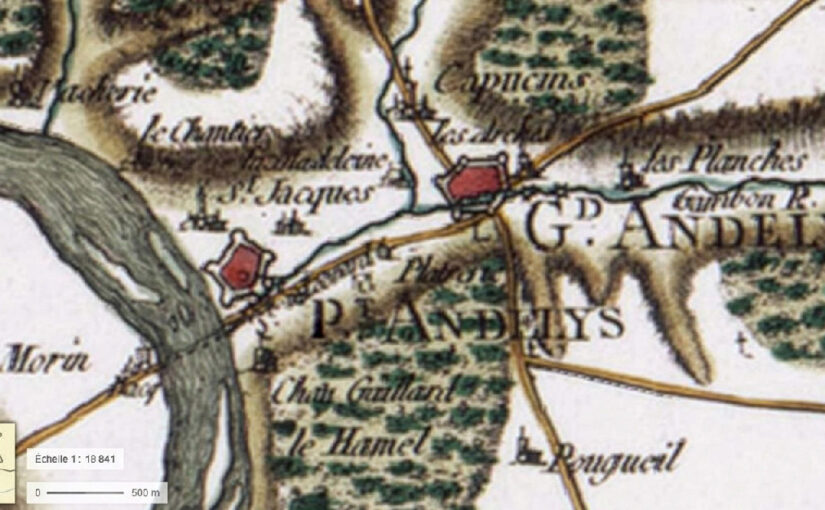
Poussin in Les Andelys – Guy de Compiègne – Les Amis du Louvre, May 2026
Stained glass, floods, a miraculous spring: revisiting the Norman roots of Poussin through Guy de Compiègne’s lecture at the Amis du Louvre (May 2026).
Guy de Compiegne has published in 2013 a remarkable essay, Nicolas Poussin and the Japanese garden Masters. In his latest book available mid-March 2015, “Nicolas Poussin, l’ambiguité recherchée” (Nicolas Poussin, in search for ambiguity), the architect and Poussin researcher continues his quest through an interpretation of ambiguous details requiring the reconsideration of the primary subject. As we … Continue reading An interview with Guy de Compiegne for his new essay on Poussin
Guy de Compiegne is an architect fascinated by Poussin and by the Japanese gardens. His book, The Visual Path – Nicolas Poussin and the Japanese garden Masters, which has just been released, is an original and brilliant approach of Poussin’s work. We met him in order to talk about this essay, published by the Varulv editions. … Continue reading An interview with Guy de Compiegne about his essay on Nicolas Poussin and the Japanese Garden Masters
Guy de Compiegne, Varulv editions, 2013 Watch Guy de Compiegne presenting his book (in French) at The Tuileries Gardens bookstore, on June 5th 2014. The painting of Nicolas Poussin and the Japanese garden of Zen Buddhism have always been and are still, independently, a source of fascination. To elaborate the ideal landscape, Poussin and Zen masters use … Continue reading The Visual Path – Nicolas Poussin and the Japanese garden Masters
The Louvre Museum, Richelieu wing, 2d floor, room 13 Oil on canvas, 121 x 175 cm Read the study by Guy de Compiegne on the composition of this painting (in French) Below are details of the work:
Order, clarity and simplicity… The notion of classicism in 17th century French painting is essentially embodied by a painter who, paradoxically, spent the majority of his career not in Paris but in Rome, on the fringes of the major trends of the time. The classical paintings of Nicolas POUSSIN, stemming from a great wealth of … Continue reading Nicolas Poussin, 1594-1665